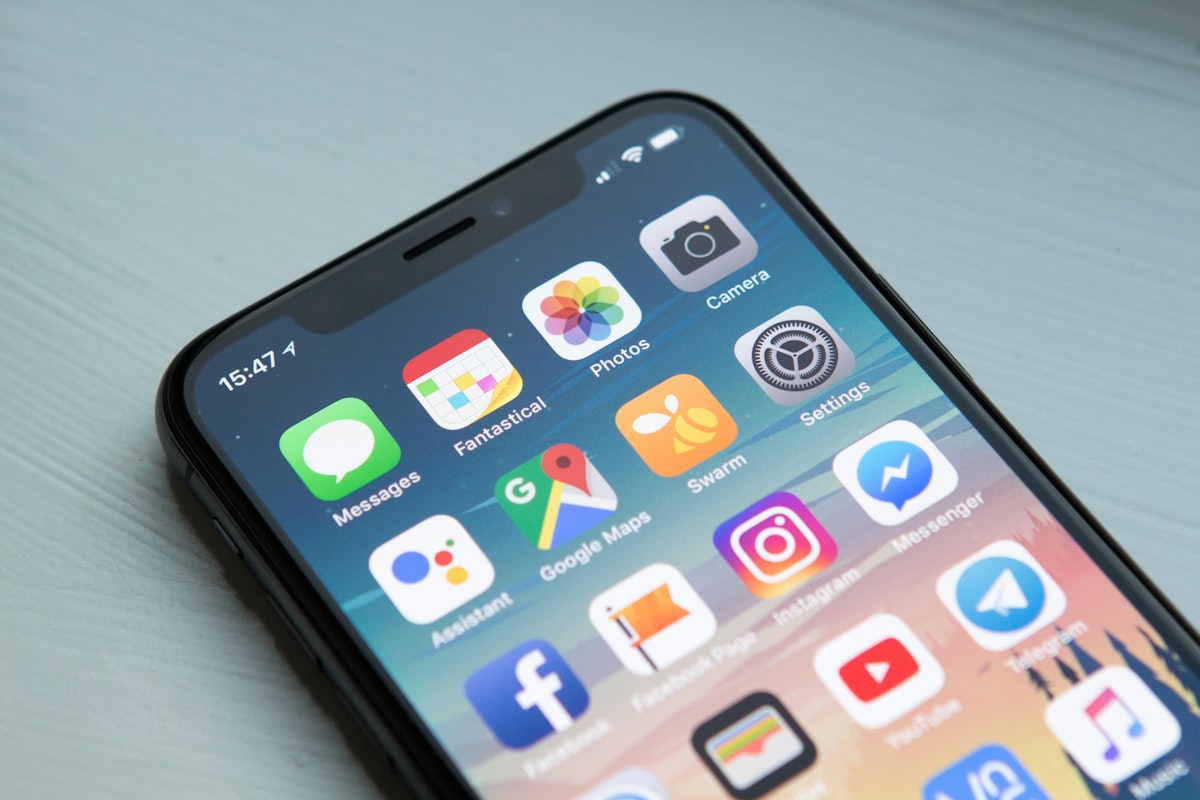
Mobile traffic now accounts for over 60% of all web traffic globally, and that number continues to climb. Yet many organizations still design their digital experiences for desktop first and then attempt to adapt them for smaller screens as an afterthought. This approach leads to bloated mobile experiences, frustrated users, and lost revenue. A true mobile-first development strategy flips this paradigm, starting with the constraints and opportunities of mobile devices and then progressively enhancing for larger screens. The result is a faster, more focused, and more effective digital experience for every user, regardless of how they access your product.
Why Mobile-First Is No Longer Optional
The case for mobile-first development has moved well beyond user preference statistics. Google's mobile-first indexing means that the mobile version of your site is what determines your search ranking, not the desktop version. Core Web Vitals, which are critical ranking factors, are measured on mobile devices. If your mobile experience is slow, clunky, or incomplete, your search visibility suffers across all devices. This has direct revenue implications for every business that depends on organic traffic.
Beyond SEO, user expectations have fundamentally shifted. People expect the same quality of experience on their phone as on their laptop. They expect fast load times, intuitive navigation, and seamless functionality. They will not pinch and zoom through a desktop-optimized interface on their phone. They will simply leave and find a competitor who respects their time and their device. Studies consistently show that 53% of mobile users abandon sites that take longer than three seconds to load, and 79% of users who encounter a poor mobile experience will seek an alternative.
The Business Impact of Mobile Performance
Mobile performance directly correlates with business outcomes in ways that are both measurable and significant. Research shows that every 100-millisecond improvement in mobile load time can increase conversion rates by up to 8%. For an e-commerce business doing $10 million in annual revenue, that single optimization could mean $800,000 in additional sales. The compounding effect of multiple mobile optimizations can transform business results.
- A one-second delay in mobile page load time reduces conversions by 7% on average
- Mobile-optimized sites see 15% higher engagement rates compared to responsive-adapted sites
- Progressive Web Apps increase mobile conversion rates by 36% compared to native mobile websites
- Mobile-first companies report 25% lower customer acquisition costs due to better ad performance
- Users spend 70% more time on apps that load in under two seconds
Core Principles of Mobile-First Design
Mobile-first design is not simply about making things smaller. It is a fundamentally different approach to product design that embraces constraints as creative catalysts. The limited screen real estate of a mobile device forces you to identify and prioritize the most important content and actions. This clarity of focus benefits users on every device, including desktop, where the absence of clutter creates a more purposeful and effective experience.
Content Priority and Progressive Disclosure
The most critical principle of mobile-first design is ruthless content prioritization. On a small screen, every pixel matters. You must identify the primary user task for each page and ensure it is immediately accessible without scrolling. Secondary content and features should be available through progressive disclosure, revealed as users need them rather than overwhelming them upfront.
This exercise of prioritization is valuable because it forces you to truly understand your users and their goals. When you cannot fit everything on a 375-pixel-wide screen, you are compelled to make decisions about what matters most. These decisions, informed by user research and business objectives, create better experiences on every screen size.
The best mobile-first designs are not stripped-down versions of a desktop experience. They are focused, intentional products that happen to work beautifully on every device. The mobile constraints do not limit creativity; they channel it toward clarity and purpose.
Touch-First Interaction Design
Mobile users interact with their devices through touch, not mouse clicks. This fundamental difference demands a different approach to interaction design. Touch targets must be at least 44x44 pixels to be comfortably tappable. Gesture-based interactions like swiping, pinching, and long-pressing should be intuitive and consistent. Forms must be designed for thumb-friendly input, with appropriate keyboard types, autocomplete, and minimal required fields.
Navigation patterns for mobile must account for thumb reach zones. The most important actions should be placed in the easily reachable area at the bottom of the screen, not hidden behind hamburger menus at the top. Bottom navigation bars, floating action buttons, and swipe gestures all leverage the natural ergonomics of how people hold and use their phones.
Technical Implementation Strategies
Implementing a mobile-first strategy involves specific technical decisions at every layer of the stack, from CSS architecture to API design to infrastructure configuration. The choices you make at the technical level determine whether your mobile-first intentions translate into a genuinely superior user experience.
Mobile-First CSS Architecture
The foundation of mobile-first development is writing CSS that starts with mobile styles as the default and uses min-width media queries to progressively enhance for larger screens. This is the opposite of the traditional approach, which starts with desktop styles and uses max-width queries to scale down. Mobile-first CSS results in smaller, more efficient stylesheets because mobile devices receive only the CSS they need, without downloading and parsing desktop-specific rules.
- Write base styles for mobile viewports with no media queries
- Use min-width breakpoints to add complexity for larger screens: 768px for tablets, 1024px for desktops
- Implement CSS Container Queries for component-level responsive behavior
- Leverage modern CSS features like Grid, Flexbox, and clamp() for fluid layouts
- Use responsive images with srcset and sizes attributes to serve appropriately sized assets
Performance Optimization for Mobile Networks
Mobile users often connect through cellular networks with higher latency and lower bandwidth than wired connections. Performance optimization is not optional for mobile-first development; it is essential. This means aggressive asset optimization, intelligent caching strategies, and thoughtful loading patterns that prioritize above-the-fold content.
Code splitting ensures that users download only the JavaScript they need for the current page. Lazy loading defers off-screen images and non-critical resources until they are needed. Service workers enable offline functionality and instant loading for repeat visits. These techniques, combined with a global CDN and server-side rendering or static generation, create mobile experiences that feel instantaneous even on slower connections.
Cross-Platform Development Approaches
For organizations that need native mobile applications alongside their web presence, the mobile-first strategy extends to choosing the right cross-platform development approach. React Native and Flutter have matured significantly, offering near-native performance with the efficiency of a shared codebase. Progressive Web Apps bridge the gap between web and native, offering app-like experiences through the browser with offline support, push notifications, and home screen installation.
Choosing the Right Approach
The choice between a Progressive Web App, a cross-platform native app, and fully native development depends on your specific requirements. PWAs are ideal when broad reach and low friction are priorities, as they require no app store installation. Cross-platform frameworks like React Native work well when you need native device capabilities and app store presence but cannot justify separate iOS and Android teams. Fully native development remains the best choice for performance-intensive applications like games or apps that require deep platform integration.
A mobile-first strategy is not a one-time project. It is an ongoing commitment to understanding how your users interact with your product on their most personal device and continuously optimizing that experience based on real data and feedback.
Measuring Mobile-First Success
A mobile-first strategy must be backed by measurable outcomes. Track Core Web Vitals, specifically Largest Contentful Paint, First Input Delay, and Cumulative Layout Shift, as your primary technical metrics. Monitor mobile conversion rates, bounce rates, and session duration as business metrics. Use real user monitoring to understand actual performance across different devices and network conditions, not just lab benchmarks.
Set up A/B testing frameworks that work across devices to validate design decisions with real user data. Compare mobile and desktop metrics to identify gaps and opportunities. Create mobile-specific dashboards that give your team visibility into the health of the mobile experience. The organizations that succeed with mobile-first are those that treat mobile performance as a first-class business metric, reviewed and optimized with the same rigor as revenue and customer satisfaction.